Tel: +86-134-31394972
E-mail: sales@pre-webguidesystem.com
Tel: +86-134-31394972
E-mail: sales@pre-webguidesystem.com
With the continuous development of the manufacturing industry, the importance of tension control in various industries has become increasingly prominent, from printing and packaging to textiles, the demand for high-precision tension control is rising. Tension sensors can measure any form of tension, however, their output signal is usually very weak. Therefore, tension signal amplifiers are needed to amplify these signals for effective control and processing.
How the tension signal amplifier works:
A tension signal amplifier is an electronic device that improves the signal-to-noise ratio by increasing the amplitude of its input signal and outputs a stronger signal. It includes a circuit that can generate a reliable control signal by amplifying the sensor signal. The output signal of the amplifier can be used to drive the detection device for real-time measurement and control of tension. The principle of the tension signal amplifier is based on the basic circuit of the amplifier. As the current passes through the input of the amplifier, the output signal will be larger than the input signal due to the amplifier's stability and amplification level.
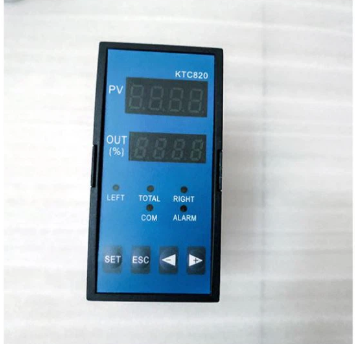
Taking KTC828b as an example, the tension signal amplifier is used to read the tension signal from the tension sensor, and after the pre-processing of the transmitter, the signal is amplified into a standard signal of 0~10V and 4~20mA with a fixed gain factor, and then the signal is output to the controller, PLC or terminal processing system.
Its functional features are:
1) Full digital processing, no potentiometer adjustment, stable and reliable, no drift.
2) Real-time display of the measured tension value.
3) Support 0~10V analog output.
4) Support 4~20mA current output.
5) Support Modbus RTU data communication, simple and convenient to connect PLC, to ensure lossless signal transmission.
6) Tension alarm output (relay normally open/normally closed contact output) can be set.
7) Adjustable output ratio.
Tension Signal Amplifier Applications:
Tension signal amplifiers are widely used in weighing, batching, force measurement, synchronization, slitting, printing and dyeing, papermaking, textile, printing, etc., as well as film film production, rubber tire industry, wire drawing industry, cable and steel wire industry, composite products industry, machine tool supporting industry, crane lifting and other industries.
Application of tension signal amplifier and tension controller:
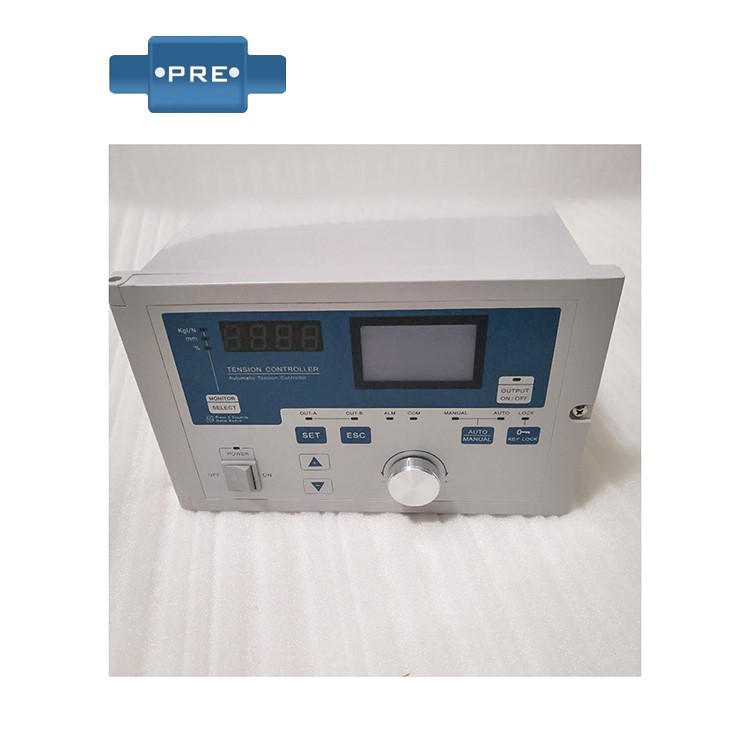
1) The tension signal amplifier is used in the tension controller to control the uniformity of the entire crimping in the production of printing and packaging, paper or film industries.
2) The tension signal amplifier is applied to the tension controller, which can track the entire production process through single or double electric eyes, find problems in time and actively deal with them, and ensure the smooth progress of the entire production process.
Which sensors does the tension signal amplifier work with?
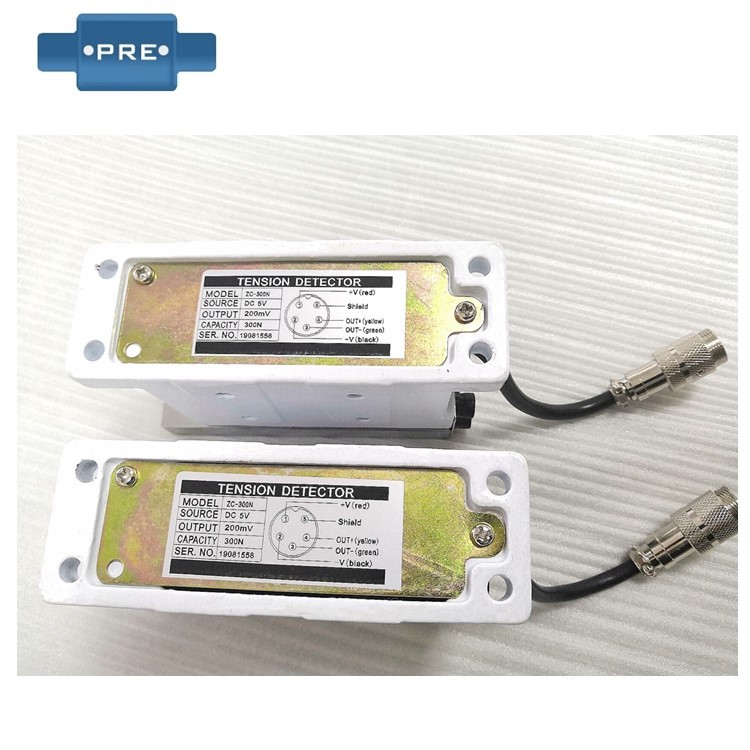
Tension signal amplifiers can be applied to a variety of different types of tension measurement sensors. For example, piezoelectric sensors and resistive strain gauge sensors can both use tension signal amplifiers for signal-to-noise ratio enhancement. The input and output circuitry of the amplifier must be matched to the sensor of choice to ensure optimal performance and sensitivity.
When choosing a tension sensor, the following factors are mainly considered:
1) Specify the type of sensor to be used according to the object to be measured and the application environment
In the process of measuring tension, even if the same quantity is measured, there may be considerable differences in the principles that can be applied during the period. When choosing, the appropriate sensor can be selected according to the actual characteristics of the physical quantity to be measured and the conditions of application, such as the size of the required measurement range, the volume of the substance to be measured, or the method of extracting the actual measured signal. After considering a variety of factors, it is more reliable to choose the right sensor.
2) Selection of the sensitivity of the device
Regardless of the type of physical quantity measured, within the range of rays that can be detected by the tension sensor, it is desirable that the sensitivity of the entire device be as high as possible. This is because the higher the sensitivity of the whole device, the greater the value of the corresponding output signal, and the higher the subsequent accuracy. However, it should be noted that its sensitivity will also have a certain relationship with the mixing of surrounding noise, so you need to distinguish between them when making measurements.
3) Characteristics of the frequency response of the device
In the process of measuring with the help of a tension sensor, the actual characteristics of the frequency response of the entire sensor directly determine the frequency of the required detection range. Generally, the detection frequency range is required to be measured without distortion, and the entire detection equipment will have a certain delay, and the shorter the delay, the better.
Contact factory in Guangdong, China
(Over 20 years experience in tension signal amplifier,tension control system production )
Previous: How The Tension Control System Works