Tel: +86-134-31394972
E-mail: sales@pre-webguidesystem.com
Tel: +86-134-31394972
E-mail: sales@pre-webguidesystem.com
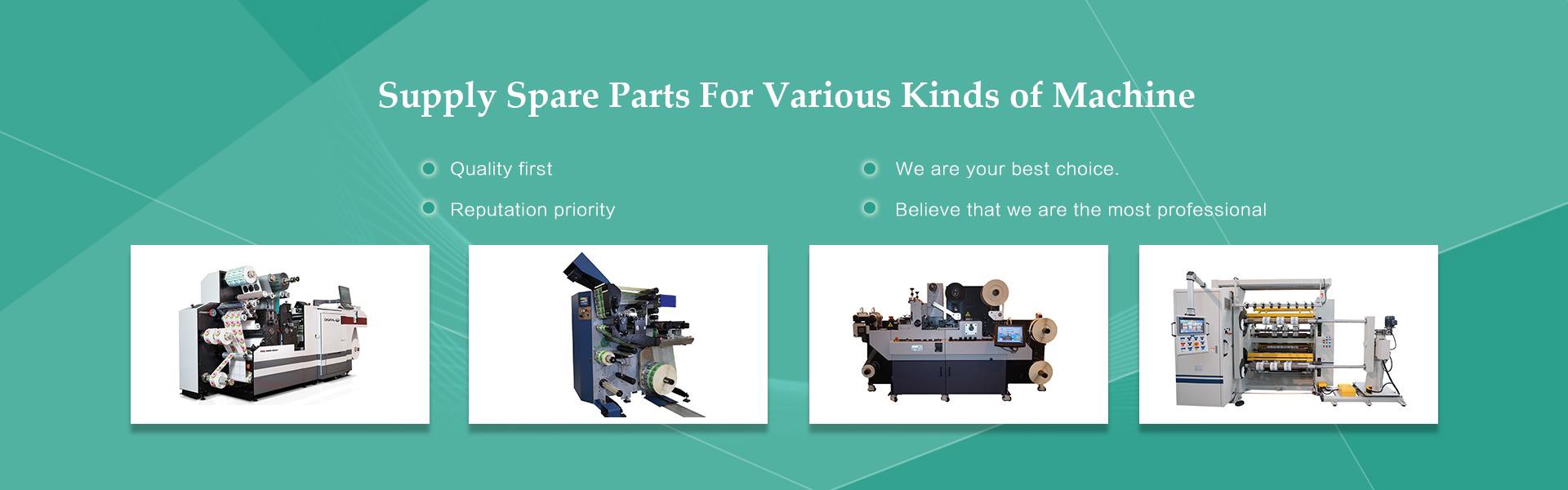
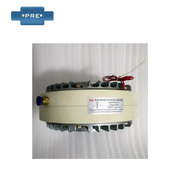
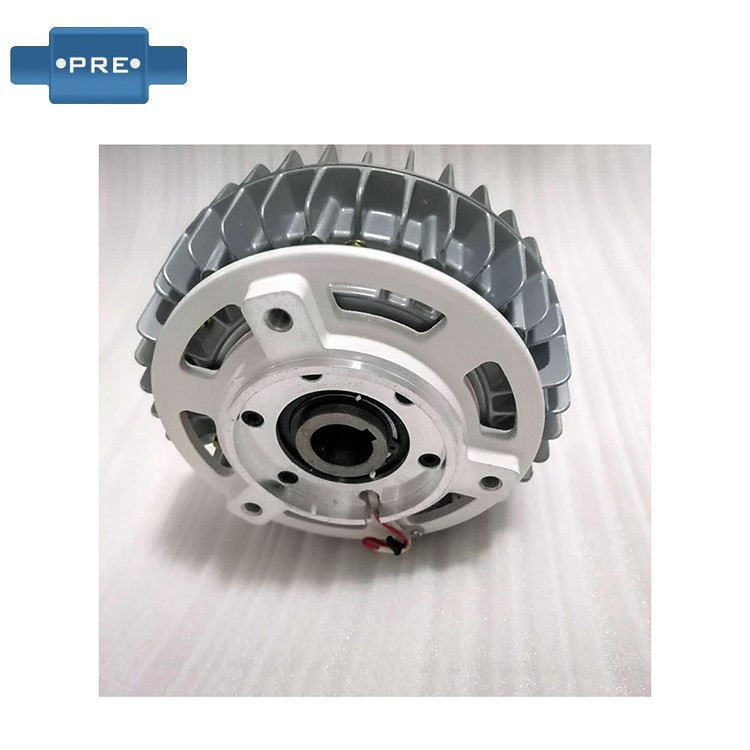
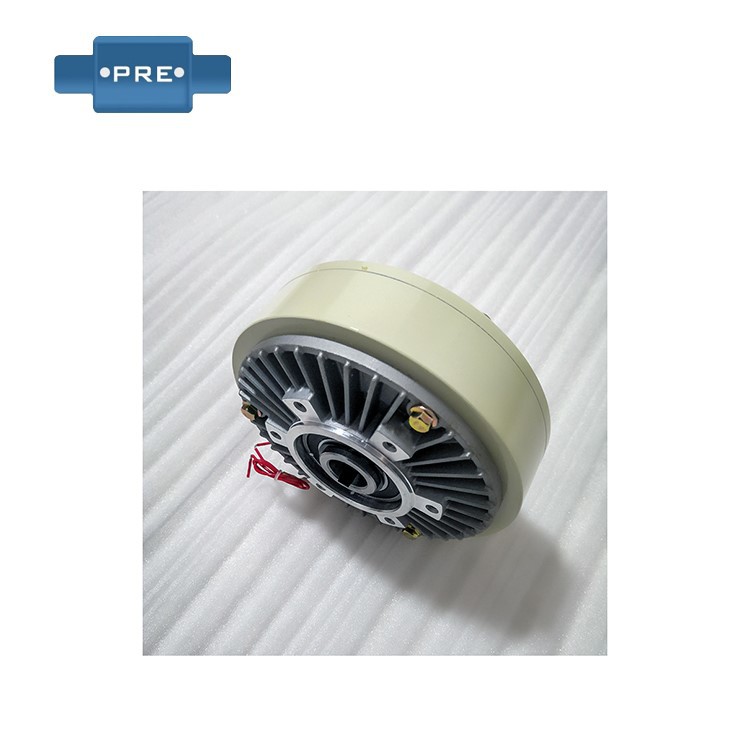
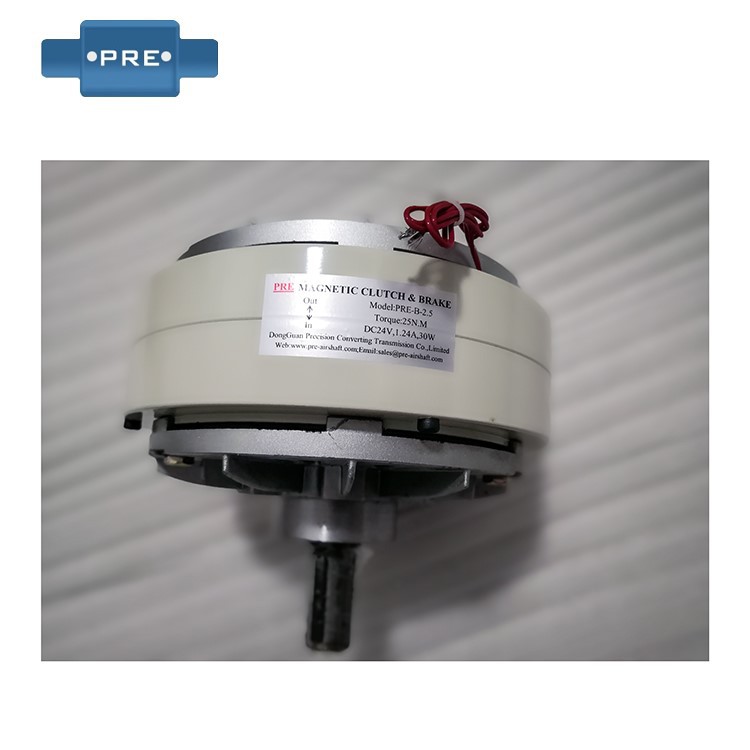
Magnetic powder brake is a common braking device, which is mainly composed of brake body, electromagnet, brake friction pad, magnetic particle, etc. Magnetic particle brake is a device that uses the change of magnetic particle under the action of magnetic field to transmit or cut off the twist, and is usually used to control the braking or load simulation of machinery. The motor is a device that converts electrical energy into mechanical energy, and is to provide energy to drive the work of the magnetic particle brake, and the connection between the two is very important.
The connection between the magnetic particle brake and the motor is mainly as follows:
1) Direct connection method
The direct connection method refers to the direct connection between the magnetic particle brake and the motor, and the advantages of this method are simple and reliable; The disadvantage is that it is not easy to maintain and replace, and when making this connection, it is necessary to pay attention to the relative position of the brake and the motor, as well as the firmness of the connection.
2) Coupling connection method
The coupling connection method is to connect the magnetic particle brake and the motor through the coupling, which can effectively solve the asymmetry problem between the brake and the motor, and ensure the balance and stability of the connection. The advantages are high torque transmission efficiency, fast response speed, and no intermediate loss; The disadvantages are: high concentricity requirements for two axes, if not installed properly, it may cause vibration or damage to the equipment, and if the shaft diameter of the motor and brake is different, an adapter or a specially designed coupling may be required.
3) Gear connection method
The gear connection method is to add the magnetic particle brake and the motor through the gear connection, this way is suitable for the occasion of the need to change the speed, the gear connection method can achieve different speeds by changing the size of the gear, and can also ensure the balance and stability of the connection. The advantages are: stable transmission ratio, compact structure, suitable for large torque demand; The disadvantage is that the gear clearance affects the control accuracy, and the maintenance cost is high.
4) Belt/chain drive
The way is to use the pulley or sprocket to transmit torque to adjust the transmission ratio; The advantages are that the shaft spacing can be adjusted, the proportion of speed or torque can be changed, the belt drive noise is low, and the chain drive has a large load. It is suitable for applications where variable speeds or large wheelbases are required: e.g. conveyor belt systems.
5) Flange mounting
The method is to fix the magnetic particle brake directly to the motor flange through the flange. Its advantages are: stable installation, concentricity to ensure that vibration is reduced; The disadvantage is that the flange needs to be mated and has less flexibility in size. It is more suitable for occasions where space is limited or high rigidity is required.
According to the different application scenarios, the connection mode between the magnetic particle brake and the motor is selected, as shown below:
Scenario 1: In the tension control system on an automated production line, the magnetic particle brake may need to cooperate with the motor to adjust the tension in real time to ensure the uniformity of the material winding. In this case, the connection needs to ensure fast response and high accuracy, and it may be preferred to use a direct coupling or flange mount connection to reduce the delay in the intermediate link.
Scenario 2: In a test bench, a magnetic particle brake used to simulate the load may need to be directly connected to the motor via a coupling in order to accurately measure the output performance of the motor. In this case, the rigidity and low inertia of the system are very important to ensure the accuracy of the test data.
Scenario 3: In a servo system, it may be necessary to integrate the control signal of the brake with the drive of the motor to achieve precise torque or position control. This may involve the connection of control circuits, such as the use of analog or digital signals to control the current of the brakes and thus adjust the braking torque.
Precautions for connection installation:
1) When installing, it is necessary to pay attention to the balance between neutral and load, if the connection is not straight or there is a deviation, it may lead to premature wear or vibration of the bearing.
2) Heat dissipation is also a problem, especially when the magnetic particle brake works under high load for a long time, additional cooling measures may be required, which can be cooled by air cooling or water cooling to prevent overheating from affecting performance or life.
3) Safety factors cannot be ignored, especially in applications with high speed or high torque, it is necessary to ensure that the strength of the connecting parts is sufficient to prevent accidents caused by fracture or falling off. It may be necessary to use safety pins or overload protection devices to disconnect when the torque exceeds a certain value to protect equipment and personnel.
4) When installing, it is also necessary to consider the convenience of maintenance and replacement in the future. If the magnetic particle brake or motor requires frequent maintenance or replacement of connections, it should be designed in a structure that is easy to remove and reinstall, such as using a quick-change coupling or a modular design.
5) Space constraints between the magnetic particle brake and the motor, whether a cardan coupling is needed to compensate for angular deviations, or whether an elastic coupling is needed to absorb vibrations.
6) For high-precision applications, it may be necessary to use high-precision hedging tools to ensure the accuracy of the installation.
7) Some preparations need to be done before the implementation of the connection: carry out some tests and verifications, such as no-load tests and load tests, to ensure that the reliability of the connection method and the integrity of the system can meet the requirements; Parameters such as torque, speed, and temperature need to be measured to ensure stable operation of the system under the expected operating conditions.
Advantages of magnetic particle brakes:
1) High-precision torque control
Linear adjustment: The output torque is approximately linear with the excitation current, and the torque can be accurately controlled by adjusting the current (0-24V or 0-10V signal).
Continuously variable speed: supports continuous adjustment from zero to rated torque, suitable for occasions that require dynamic adjustment (e.g. tension control, precision winding)
2) Quick response
Millisecond-level response, very fast response speed: When the excitation current changes, the magnetization and dispersion process of the magnetic particle is completed quickly, and the response time is usually within tens of milliseconds, which is suitable for high-frequency start-stop or fast switching scenarios.
No mechanical delay: Compared to traditional mechanical brakes, there is no friction pad contact delay, so the action is more sensitive and the response is faster.
3) No mechanical friction loss
Non-contact transmission: torque is transmitted through magnetic particles, and there is no direct mechanical contact between the input shaft and the output shaft, which avoids the wear of the friction plate and prolongs the service life.
Silent operation: Compared to traditional mechanical brakes, there is no mechanical impact or friction noise, making it suitable for noise-sensitive environments (e.g., laboratories, medical equipment).
4) Compact structure and flexible installation
Small size: Integrated design, suitable for space-constrained occasions.
Multiple mounting options: horizontal/vertical mounting, flange fixing or shaft end connection, adapting to different mechanical layouts.
5) Stability and reliability
Strong anti-interference: the torque output is less affected by the ambient temperature and humidity (it needs to be used under rated working conditions).
Overload Protection: Automatically limits the maximum torque by limiting the current to prevent damage to the device.
Long life: The magnetic particle has a long life (usually tens of thousands of hours), a long maintenance interval, and only needs to be replaced regularly with the magnetic particle or seal.
Forced cooling: In high-load or continuous working scenarios, an external air-cooled, water-cooled, or oil-cooled system is required to avoid high-temperature failure of the magnetic particle.
6) Broad applicability
Tension control: printing machines, textile machines, film winding equipment.
Load simulation: Dynamic loading of an electric/engine test bench.
Overload protection: safe braking and torque limiting in automated production lines.
Precision positioning: Damping control of robot joints.
Disadvantages of magnetic particle brakes:
1) Magnetic particle aging: Magnetic particle may deteriorate after long-term use, and regular maintenance is required.
2) Heat dissipation dependence: High load conditions require additional cooling systems to work together, increasing complexity.
3) Higher initial investment cost: Compared with mechanical brakes, the purchase cost is slightly higher, but the long-term maintenance cost is low.
Contact factory in Guangdong, China
(Over 20 years experience in Magnetic powder brakes production )
Previous: Where Are Pneumatic Brakes And Magnetic Powder Brakes Commonly Used?
Next: What Powder Is Used in Magnetic Particle Clutch Or Brake?