Tel: +86-134-31394972
E-mail: sales@pre-webguidesystem.com
Tel: +86-134-31394972
E-mail: sales@pre-webguidesystem.com
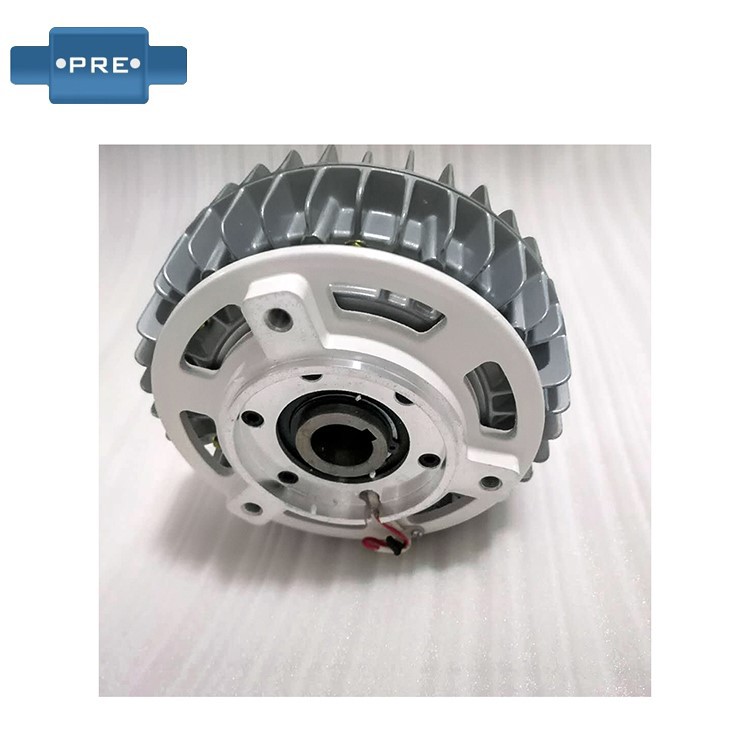
In the production process of products, packaging products are generally the last link, and the packaging machine is responsible for the final packaging of products. However, tension control of films or other packaging materials has always been a challenge during the packaging process. Excessive tension may cause damage to the packaging material, while too little tension may affect the tightness of the packaging, leading to product safety issues. To address this pain point, magnetic particle brakes can play an important role in the application for precise tension control. Here's the whole process of applying:
1) In order to optimize the tension control system of the packaging machine, the technical team completed the installation and commissioning of the magnetic particle brake under the guidance of the engineer. First, engineers conducted a detailed evaluation of the existing packaging machine system to determine the optimal installation location for the magnetic particle brakes. The team then selected a magnetic particle brake of the appropriate size and connected it to a tension sensor and controller.
2) During the debugging process, the technical team finally achieved the ideal tension control effect by repeatedly testing and adjusting the current size. Through precise tension control, the tension of the packaging material is maintained uniformly throughout the packaging process, avoiding the problem of material breakage and poor packaging. At the same time, the stability of the magnetic particle brake ensures the reliability of the system in long-term operation, and effectively reduces the maintenance frequency of the equipment. Through the use of magnetic particle brake in the tension control of the packaging machine, first of all, the precise tension control greatly improves the packaging quality, makes the appearance of the product more neat and beautiful, and wins the satisfaction and recognition of customers. Secondly, due to the more efficient use of packaging materials, waste is reduced and production costs are reduced. Finally, the introduction of magnetic particle brakes has improved the automation level and production efficiency of the production line, further enhancing the company's competitiveness in the industry.
The working principle of magnetic particle brake:
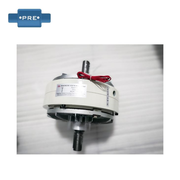
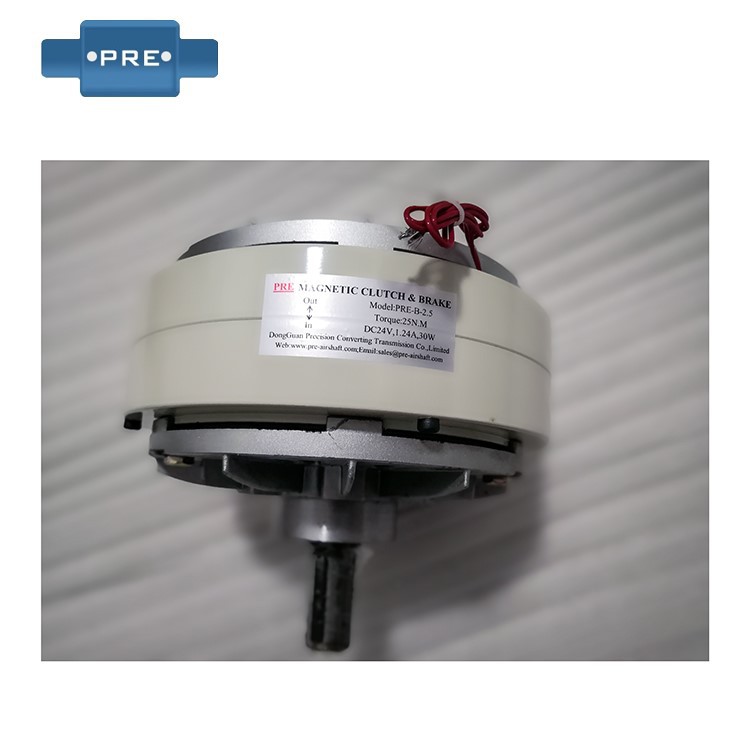
A magnetic particle brake is a magnetic field-controlled device that is filled with magnetic particles, which are affected by magnetic forces when energized to form a magnetic field, creating a bond that provides braking torque. By adjusting the magnitude of the current, the braking torque can be precisely controlled, and the tension of the packaging material can be precisely controlled.
Advantages of magnetic particle brakes:
1) High-precision torque control The control range of torque is very wide, and the control accuracy is high, and the transmission torque and excitation current are in the correct proportion, which can achieve high-precision control.
2) Superior durability and long life The use of super alloy magnetic powder with super heat resistance, wear resistance, oxidation resistance and corrosion resistance has a long service life.
3) Stable torque characteristics of magnetic particles The magnetic characteristics of magnetic particles are good, and the binding force between powder particles is stable, and the sliding torque is very stable, which has no relationship with the relative number of revolutions and can maintain a constant torque for a long time.
4) Continuous sliding operation and use of excellent heat dissipation effect and uniform thermal deformation cooling structure, coupled with the high heat resistance of the magnetic particle, allowable bonding and braking power and sliding power are large, and can smooth sliding operation without causing vibration.
5) Smooth connection, no impact The impact of the connection is very small, and it can start and stop smoothly without impact. In addition, the resistance torque is extremely small, so it does not cause unwanted heat generation.
6) Suitable for high-frequency operation: Agile and fast response and special heat dissipation structure, suitable for high-frequency operation.
7) Lightweight, maintenance-free, long life The model is simple and lightweight, using high-temperature resistant coils and special grease bearings, and applying wear-resistant special treatment to the armature that is easy to wear and tear to prolong the service life.
How to choose the right magnetic particle brake? When selecting magnetic particle brakes, three factors are generally considered: torque, speed, and slip power.
1) Torque: Calculate the maximum and minimum values of torque to check whether it is within the controllable range. The torque of the magnetic particle brake can be controlled in the range from the rated torque to the idle torque of the product.
2) Speed: The maximum speed of the magnetic particle brake should be controlled below the allowable speed. The minimum speed of the magnetic particle brake should be more than 15r/min, and the speed difference between the input and output when the magnetic particle brake is more than 15r/min.
3) Slip power: Since the magnetic particle brake is used in a continuous slip state when the tension is controlled, the temperature of the magnetic particle brake body will rise due to the slip heat. The heat generated during operation must be controlled below the allowable continuous slip power of the model used.
Things to note when using magnetic particle brakes:
1) Due to the fact that the magnetic powder filled in between the two groups of units is scattered on one side during transportation or placed for too long time, it is necessary to do excitation before starting the machine to avoid stuck.
2) Be aware of moisture. If the magnetic particle is wet, the properties will become unstable, so be careful not to allow oil or moisture to get inside. In particular, when installed in the gearbox, the oil will invade through the shaft, so it should be completely sealed with a film.
3) Pay attention to the surface temperature. The maximum surface temperature caused by continuous operation is 90 degrees Celsius or less during operation, and the durability is greatly reduced when this value is exceeded, so it is necessary to use the above limit temperature as the standard and keep the allowable sliding operation rate during use.
Contact factory in Guangdong, China
(Over 20 years experience in magnetic powder brake& clutch production )
Previous: The Difference Between Pneumatic Brakes And Magnetic Particle Brakes
Next: Magnetic Powder Brakes For Use With Air Expanded Shafts