Tel: +86-134-31394972
E-mail: sales@pre-webguidesystem.com
Tel: +86-134-31394972
E-mail: sales@pre-webguidesystem.com
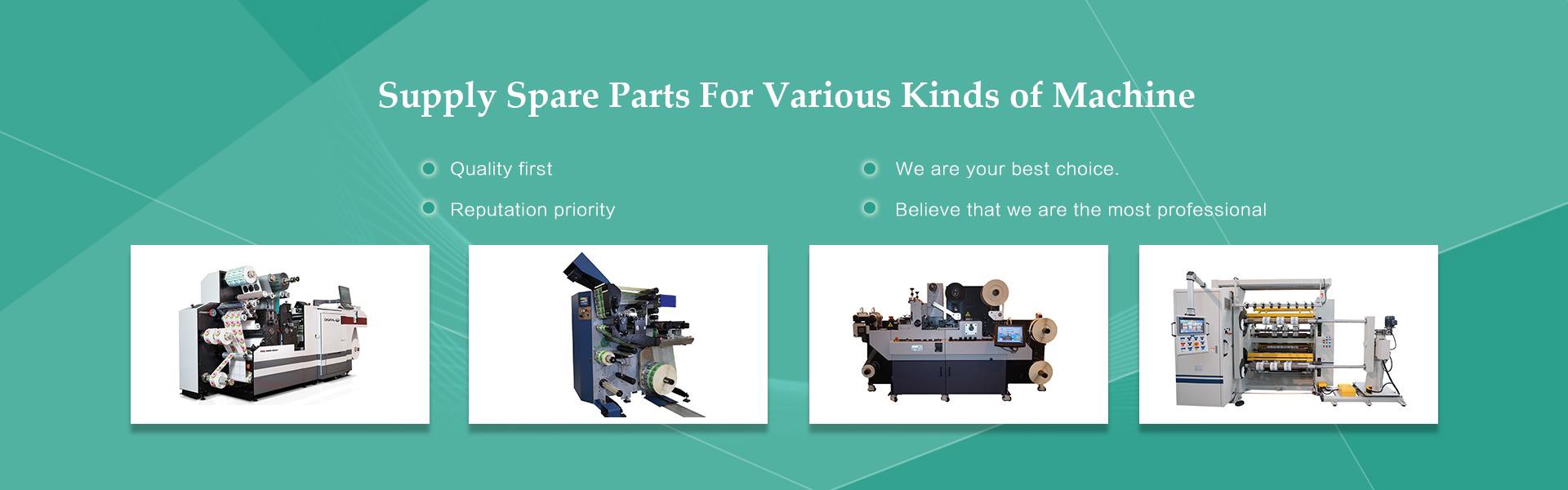
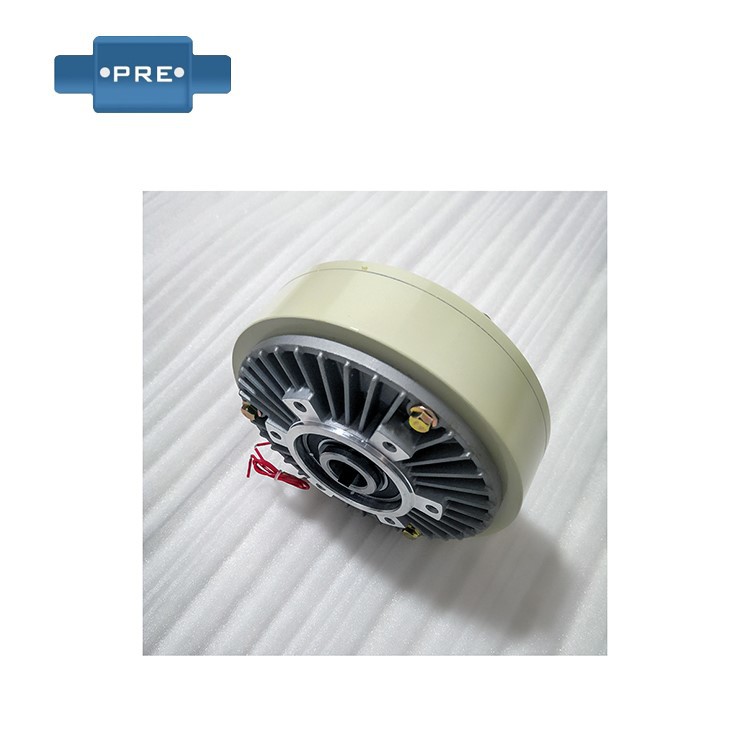
Magnetic powder clutch and magnetic particle brake is a kind of magnetic particle with high permeability as the working medium, and the excitation current as the control means of superior performance of the new automatic control element, its working principle is to generate a magnetic field after the DC power supply is turned on, and the working medium magnetic powder is formed under the action of magnetic field lines to achieve the purpose of braking torque, which is characterized by fast response, good linearity, constant control torque, stable operation, simple structure, no noise, and convenient maintenance.
Magnetic particles for magnetic clutches and brakes generally need to have the following basic characteristics:
1) High permeability: fast response to magnetic field changes ensures efficient torque transmission.
2) High saturation magnetic induction intensity: Maintain stable performance under strong magnetic field.
3) Abrasion resistance: Reduce particle loss caused by long-term friction.
4) Heat resistance: withstand the temperature rise during operation (usually need to withstand 80°C~200°C).
5) Chemical stability: anti-oxidation, anti-corrosion, to avoid failure due to environmental or temperature changes.
6) Fluidity: The particles are evenly dispersed and fill the gap to ensure a smooth action.
Analysis of the types of magnetic particles from the material point of view of magnetic particles:
1) Iron-based alloy magnetic powder
a. Fe-Si-Al, Sendust:
Advantages: high permeability, low coercivity, low cost.
Applications: Most commonly found in industrial-grade clutches and brakes, suitable for low to medium temperature environments.
b. Iron-chromium-silicon (Fe-Cr-Si):
Advantages: Higher heat resistance and oxidation resistance, suitable for high temperature scenarios.
c. Pure iron powder:
Advantages: High saturation magnetic induction, but easy to oxidize, requiring surface treatment (e.g. phosphating or plating).
2) Cobalt-based alloy magnetic particles**
Cobalt-iron (Co-Fe) or cobalt-nickel (Co-Ni):
Advantages: Higher Curie temperature (up to 500°C) and excellent high temperature resistance.
Applications: Aerospace, high-precision instruments and other extreme environments (such as semiconductors, robotics industry), but the cost is high.
3) Soft magnetic composites
Insulating coating magnetic powder (e.g. iron powder with SiO₂ or organic resin):
Advantage: Eddy current losses can be reduced and high-frequency response characteristics can be improved.
Applicable scenarios: high-frequency switching or precision equipment that requires a quick response.
The essence of magnetic particle filling is to achieve the required magnetic flux through the distribution density of magnetic particles in the air gap, and then control the torque. The larger the size (or "weight") of the device, the larger the air gap volume and higher torque requirements, and therefore the need for more magnetic particles. In addition, in magnetic particle brakes and magnetic clutches, the amount of magnetic powder is not directly determined by the physical weight of the equipment, but is closely related to parameters such as air gap volume, torque demand, and magnetic circuit design. The following is a reference for the amount of magnetic particles of different specifications of equipment:
1) Compact equipment (torque<50N·m)
Application scenarios: small robot joints, precision instruments.
Air gap parameters: radius 2~5cm, single gap height 0.05~0.1cm.
The amount of magnetic powder required to fill: about 10~50g.
2) Medium-sized equipment (torque 50~500N·m)
Application scenarios: machine tool feed system, printing machinery.
Air gap parameters: radius 5~15cm, gap height 0.1~0.3cm, multi-layer structure (N=2~5).
Required filling magnetic powder weight: about 100~800g.
3) Large-scale equipment (torque>500N·m)
Application scenarios: heavy machinery braking, wind power pitch system.
Air gap parameters: radius 5~15cm, gap height 0.1~0.3cm, multi-layer structure (N=2~5).
The amount of magnetic powder required is about 1~5kg.
A brief example of how to estimate the amount of magnetic powder used in common industrial clutches and brakes based on physical weight:
0.6KG ADD 10 GRAMS, 1.5KG ADD 20 GRAMS, 2.5KG ADD 33 GRAMS, 5KG ADD 60 GRAMS, 10KG ADD 140 GRAMS, 20KG ADD 225 GRAMS, 40KG ADD 370 GRAMS. (The above is the magnetic powder added to the standard model, and the maintenance machine needs to add 10%~20% more magnetic powder on this basis).
Note: Add fine magnetic powder (150-250 mesh) below 5KG, and coarse magnetic powder (80-150 mesh) above 5KG.
Contact factory in Guangdong, China
(Over 20 years experience in Pneumatic brakes,Magnetic powder brakes production )
Previous: What Are The Connection Methods Between The Magnetic Powder Brake And The Motor?
Next: The Difference Between Pneumatic Brakes And Magnetic Particle Brakes