Tel: +86-134-31394972
E-mail: sales@pre-webguidesystem.com
Tel: +86-134-31394972
E-mail: sales@pre-webguidesystem.com
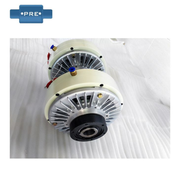
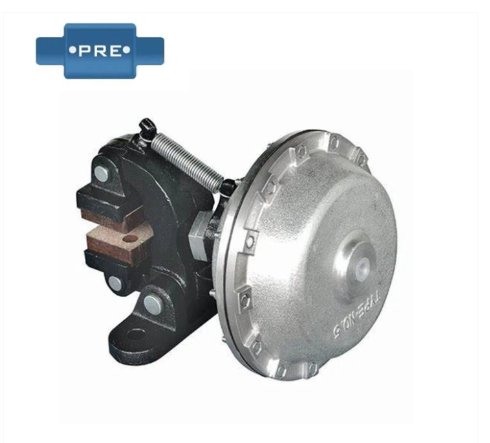
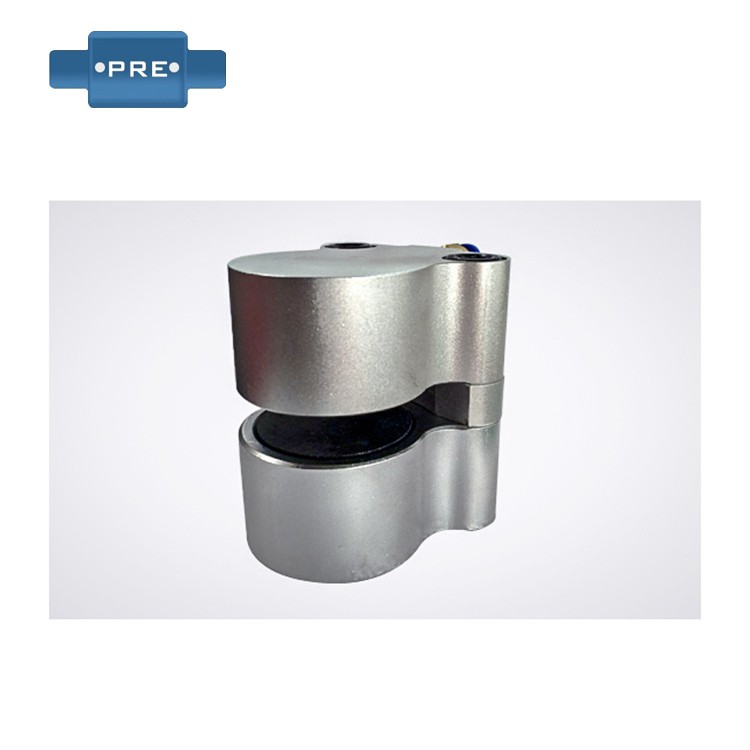
The structure of the pneumatic brake: the main components of the pneumatic brake include the air source, piston and cylinder, brake pads and brake discs, and control system. The air source provides the gas pressure, the cylinder and the piston form a device, the brake pads contact with the brake disc to produce friction, and the control system adjusts the contact force between the air source and the brake pads.
The working principle of the pneumatic brake: after the air circuit is connected, the piston pushes the piston frame and the friction plate to move axially and compresses the return spring until the rotating bushing disc is compressed, and the resistance torque is applied until the shaft bushing disc and the associated rotating body stop rotating. After cutting off the gas circuit, the piston frame drives the friction plate to return and disengage from the attached shaft bushing disc under the action of the return spring return force, and the brake is released at this time.
Features of pneumatic brakes:
Simple structure, stable action, easy installation, no noise, good linearity, no no-load torque, fast heat dissipation, light weight, easy adjustment and high temperature resistance under high load
Pneumatic brakes are mainly used in the following applications:
1) Industrial production line
- Emergency shutdown protection for large conveyor belts and mining machinery.
- Quick braking of stamping machines, packaging machines, printing machines, textile machines, winding machines and forging equipment (protection against overload or inertial shock).
2) Special environment
- High-temperature, dusty environments (e.g. steel mills) due to the strong anti-pollution ability of the pneumatic system.
- Explosion-proof occasions (e.g. petrochemical), because there is no risk of electric sparks, wire and cable equipment.
3) Low-cost demand scenarios
- Situations where control accuracy is not high but an economical solution is required (e.g. agricultural machinery).
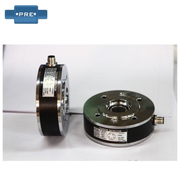
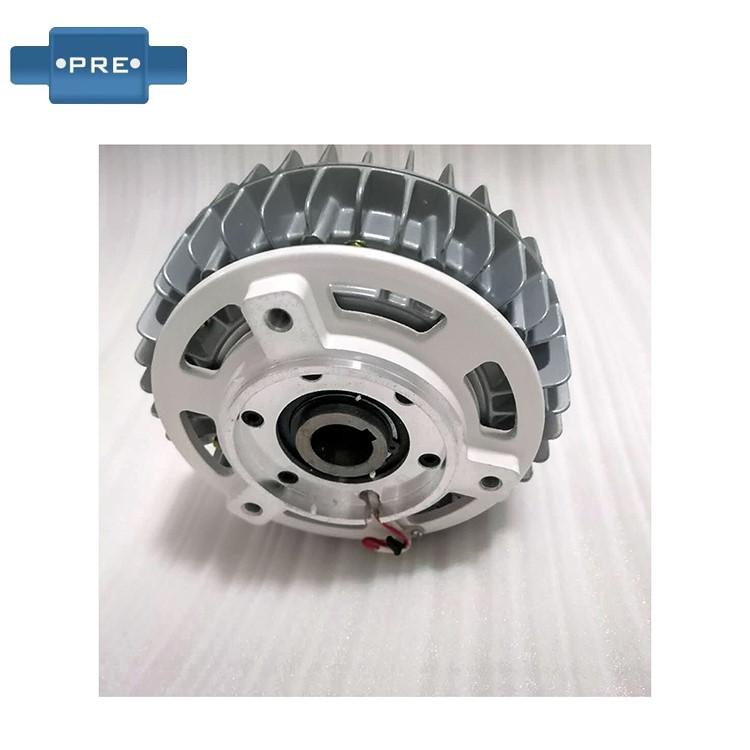
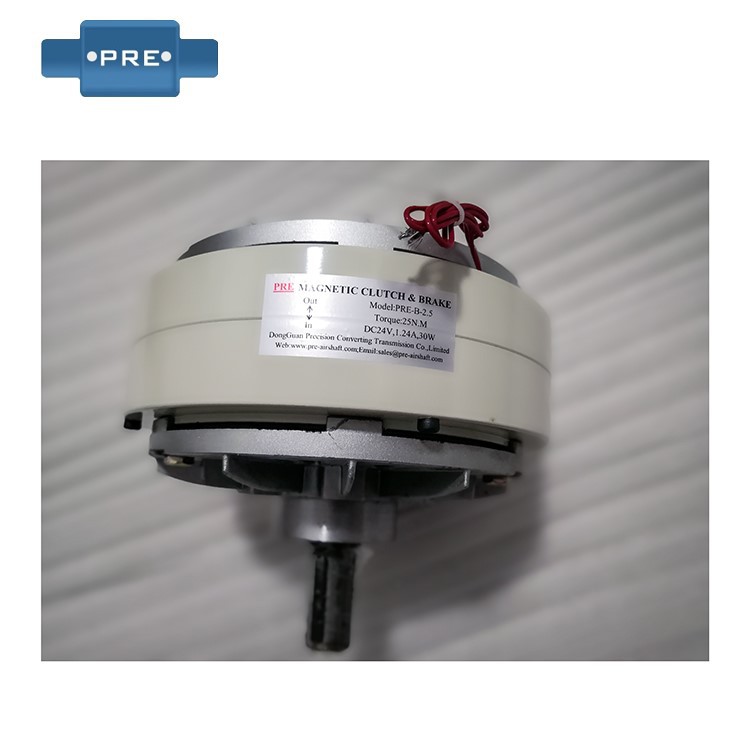
The structure of the magnetic particle brake is mainly composed of an inner rotor, an outer rotor, an excitation coil and a magnetic particle.
The working principle of magnetic particle brake: magnetic particle brake is based on the electromagnetic principle and the use of magnetic powder to transmit torque, it has a linear relationship between the excitation current and the transmitted torque, and can transmit a certain torque under the condition that it has nothing to do with the slip.
Advantages of magnetic particle brakes:
1) The magnetic powder brake has a large braking torque, which is suitable for high-power transmission system.
2) The braking torque can be adjusted by changing the current of the electromagnetic coil, which has better control performance.
3) There is no need for contact friction during braking, so it has low wear and long service life.
4) The braking effect is stable, no noise, no vibration, and the protection performance of mechanical equipment is good.
Disadvantages of magnetic particle brakes:
The braking torque of the magnetic particle brake is greatly affected by the temperature, and the braking torque will be reduced if the temperature is too high. Solenoid coils generate heat during operation and need to be cooled.
Magnetic particle brakes are mainly used in the following applications:
1) Precision Machinery & Automation
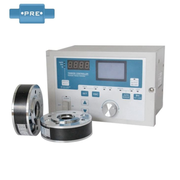
- Tension control of the printing machine (maintain the constant tension of the roll and avoid paper breakage or wrinkles).
- Precise unwinding and winding of winding machines (e.g. motor coils, fiber optic winding).
2) Test equipment
- Load simulation testing of power machinery (engines, motors).
- Dynamic loading and braking of material mechanics testing machines.
3) Servo system
- Overload protection or emergency braking of robot joints.
- Feed systems for high-precision machine tools (e.g. brake positioning for CNC machines).
4) Lightweight and low-maintenance scenarios
- Medical equipment (e.g., rotating parts of CT machines) and office equipment (copier's feeding systems) that require silence and maintenance-free.
Contact factory in Guangdong, China
(Over 20 years experience in magnetic powder brakes & pneumatic brakes production )
Previous: No Information
Next: What Are The Connection Methods Between The Magnetic Powder Brake And The Motor?