Tel: +86-134-31394972
E-mail: sales@pre-webguidesystem.com
Tel: +86-134-31394972
E-mail: sales@pre-webguidesystem.com
An embossing roll is a machine accessory that forms a specific pattern or texture on the surface of a material through a rolling, pressing, or extrusion process. It usually consists of a pair of rollers, at least one of which has an uneven pattern or pattern on the surface. These patterns can be a variety of shapes, such as lines, dots, geometric shapes, etc., and their depth and density can be adjusted as needed.
The working principle of embossing rollers:
The working principle of embossing rollers is based on the fact that the material is clamped between two rotating rollers, where the pattern on at least one of the rollers is transferred to the surface of the material. This transfer is usually achieved by pressing or extruding, and the surface pattern of the rollers leaves a corresponding mark or texture on the material.
Types of embossing rollers:
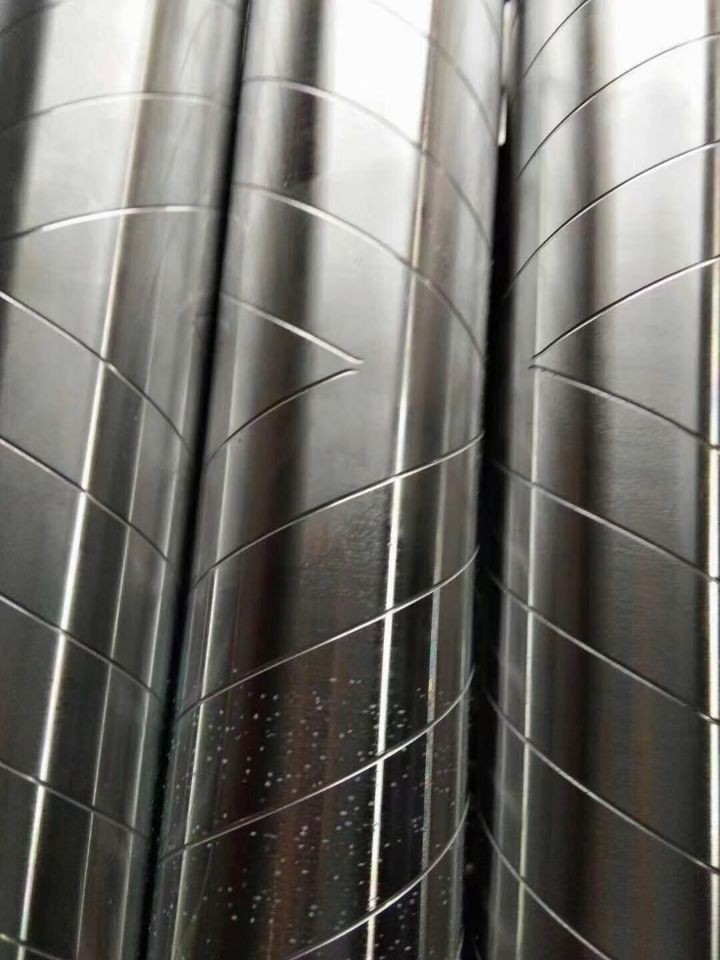
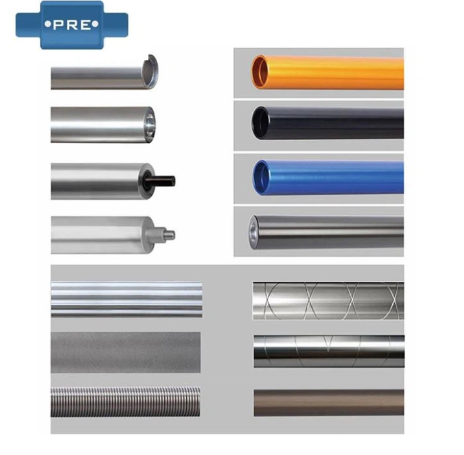
Steel embossing rollers: Steel embossing rollers are usually made of alloy steel, and the surface is heat-treated and polished, which has hardness and wear resistance. This kind of embossing roller is often used for surface embossing treatment on metal plates, pipes, etc., which can produce clear and exquisite patterns and textures, and is widely used in architectural decoration, automobile manufacturing and other fields.
Rubber embossing roller: The rubber embossing roller is made of highly elastic rubber material, and the surface is specially treated to achieve different embossing effects. This kind of embossing roller is often used for surface treatment of textile, leather, plastic and other materials, which can increase the aesthetics and texture of the material, and is widely used in clothing, luggage and other industries.
Silicone embossing roller: Silicone embossing roller is made of highly elastic silicone material, which has good wear resistance and high temperature resistance. This kind of embossing roller is often used for surface embossing treatment of paper, plastic film, ceramic tiles and other materials, which can produce delicate patterns and textures, and is widely used in printing, packaging and other industries.
Leather embossing roller: Leather embossing roller is usually made of synthetic materials or metal materials, and the surface is specially treated with good wear resistance and embossing effect. This kind of embossing roller is often used to emboss the surface of leather products, which can achieve different textures and patterns, and is widely used in leather goods, footwear and other industries.
Printing roller: Printing roller is a special embossing roller, usually made of metal material or rubber material, with a specific pattern or lettering. This embossing roller is often used for printing paper, cloth and other materials, which can achieve different printing effects and is widely used in printing, textile and other industries.
The main application range of embossing rollers:
1) Textile industry: used for printing fabrics or textile surfaces to increase decoration and artistic sense.
2) Plastic and rubber industry: used to manufacture plastic sheets or rubber products with specific textures to enhance the appearance and touch.
3) Metalworking: Used to create decorative textures on metal surfaces, such as on furniture, construction, and automotive parts.
4) Food processing: used to produce food with decorative patterns, such as biscuits, chocolate, etc.
5) Paper industry: used to print patterns or patterns on the surface of paper to increase the value and aesthetics of paper.
The production process of embossing rollers:
1) Blanking: seamless steel pipe for roller body, 45 round steel for shaft head and flange at both ends
2) Turning: Turning the joint surface of the mating parts of the roller body, end plate and shaft head, etc.,
3) Welding processing: (according to the drawings, if there is oil or water and other structures inside the roller body, the inner tube welding processing needs to be carried out in advance) Roller inner tube welding: correct the coaxiality of the shaft at both ends and the inner casing, and only weld the inner end plate on the shaft head. Put the inner sleeve into the roller body, and weld the junction of the inner end plate and the roller body. The outer end plate is installed on the shaft at both ends, and the junction of the outer end plate and the joint surface of the shaft and the roller body is welded.
4) The roll blank is annealed to eliminate the internal stress.
5) One end of the steel roller shaft is flattened and the standard center hole is drilled.
6) Turning: Divide the parts of the rough and fine turning steel roller body to the required size of the drawing, and then frame the center frame, turn the end face, and drill to the size.
7) Process the pattern on the surface of the roller according to the customer's pattern requirements. This is a vital part of the embossing roller production process, which requires the embossing roller production personnel to have rich experience and formulate the production process according to the customer's pattern requirements. In the production process, the embosser should be serious, careful and meticulous, and the patterns produced should be clear, rich in layers and strong in three-dimensionality.
8) After the pattern is completed, the surface of the roller body is plated with a hard chrome layer or sprayed with other materials (depending on the purpose of the customer's embossing roller)
9) Correct the static balance of the steel roller.
Contact factory in Guangdong, China
(Over 20 years experience in rollers production )